
Entering the gym’s weight room for the first time is the closest thing to landing on an alien planet. There are cables crossing everywhere, benches inclined at weird angles, and a bunch of people who seem to know exactly what they are doing while you walk around pretending to look busy with your water bottle in hand.
You end up looking at so many machines that, out of fear of making a fool of yourself, you head back to the treadmill zone to do boring cardio—but you don’t have to do that.
We are going to fix that today. You don’t need to understand advanced anatomy. You just need a straightforward, no-nonsense guide designed for people eager to change physically who want results without complicating their lives.
The Smart Approach: Train Movements, Not Individual Muscles
Forget about bodybuilder routines that split the body into “Chest Mondays” or “Leg Wednesdays.” That isn’t efficient if you’re starting out. The ideal way to see quick results and learn safely is a 3-day-a-week Fullbody routine (for example: Monday, Wednesday, and Friday).
To master the weight room, you only need to understand that your body moves through four basic patterns: pushing things, pulling them, bending down, and lifting objects off the floor. If your routine covers these movements, you are working 100% of your body in a balanced way, burning more calories, and protecting your posture.
The 3 Sacred Laws to Stop Wasting Time in the Room
Before touching a single dumbbell, engrave these three practical rules into your head. They are the difference between progressing every week or stalling in your first month:
- The “Goldilocks” test for choosing weight: If your routine says do 10 repetitions, the first 6 should feel smooth. Repetitions 7 and 8 should require real effort. The last two (9 and 10) have to be very difficult, forcing you to focus completely, but without losing good posture. If you finish all 10 reps without breaking a sweat, it’s too light. If you are already shaking and arching your back by the sixth, you’ve gone too far.
- Rest is for recovery, not for spending 5 minutes on your phone: When it’s time to rest between exercises, stay seated, catch your breath, and take a sip of water. If you open social media to reply to messages, you will lose track of time, your body will cool down, and the workout will lose all its intensity.
- Write everything down (Your memory will betray you): Log things on your phone or in a notebook. Write down the weight you used and the reps you achieved. When you return to the gym two days later, you will know exactly where to start instead of improvising based on which machines are free—improvising is the worst thing you can do.
Step-by-Step Guide: The 6 Exercises Explained Without Technical Jargon
Here is the simple explanation of how to execute each movement of the routine so you can get straight to the point with total confidence:
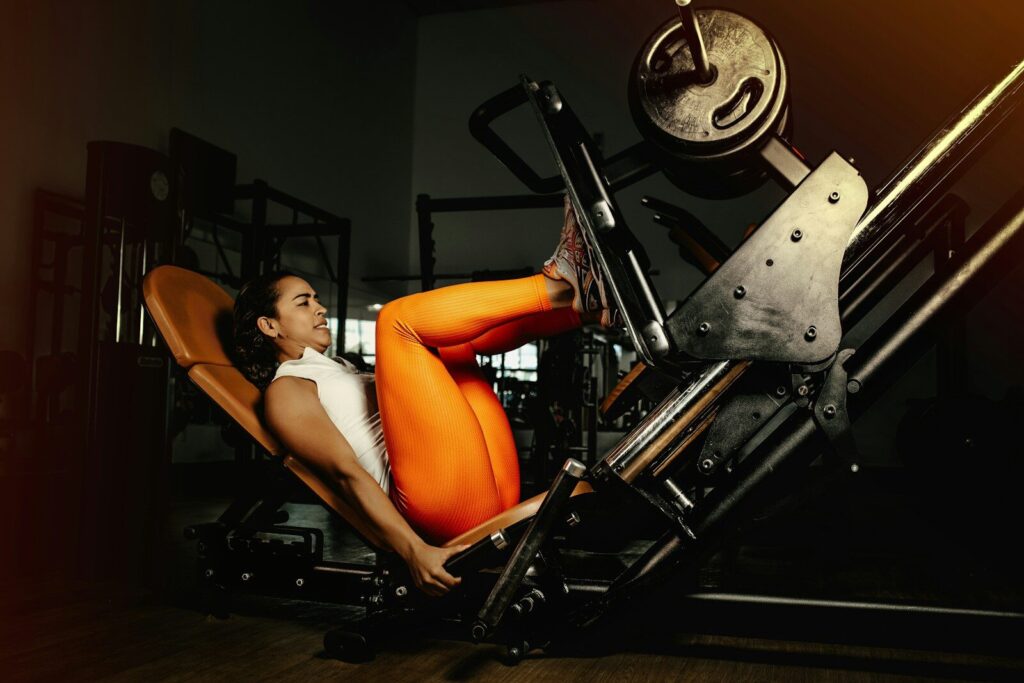
1. Leg Press
The movement: Sit on the large inclined machine and place your feet on the platform shoulder-width apart. Unlock the safety latch and lower your knees toward your chest in a controlled manner. Push hard using your heels, but never lock your knees completely when straightening your legs; leave them bent a millimeter at the end to protect the joint.
2. Lat Pulldown
The movement: Grip the high bar slightly wider than shoulder-width apart and sit down, tucking your knees under the rollers. Pull the bar down toward the upper part of your chest (not your neck), thinking about bringing your elbows down toward your back pockets. Let the weight back up under control.

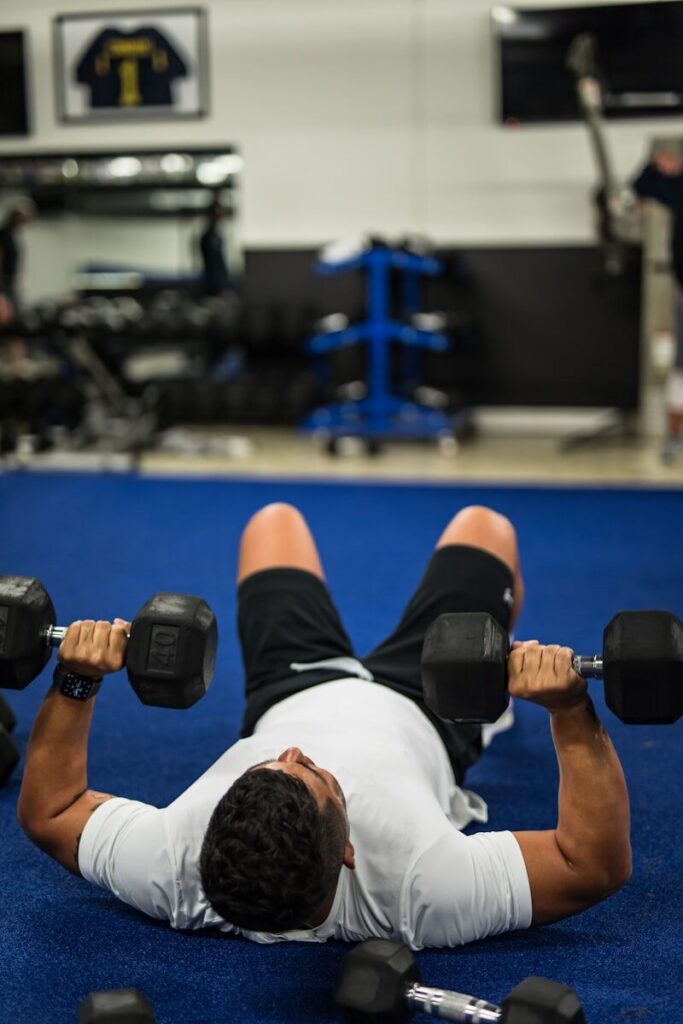
3. Dumbbell Chest Press
The movement: Lie face up on a flat bench with a dumbbell in each hand. Push the weights straight up toward the ceiling until your arms are straight. Lower slowly and with control until the dumbbells are almost at armpit level, feeling your chest stretch.
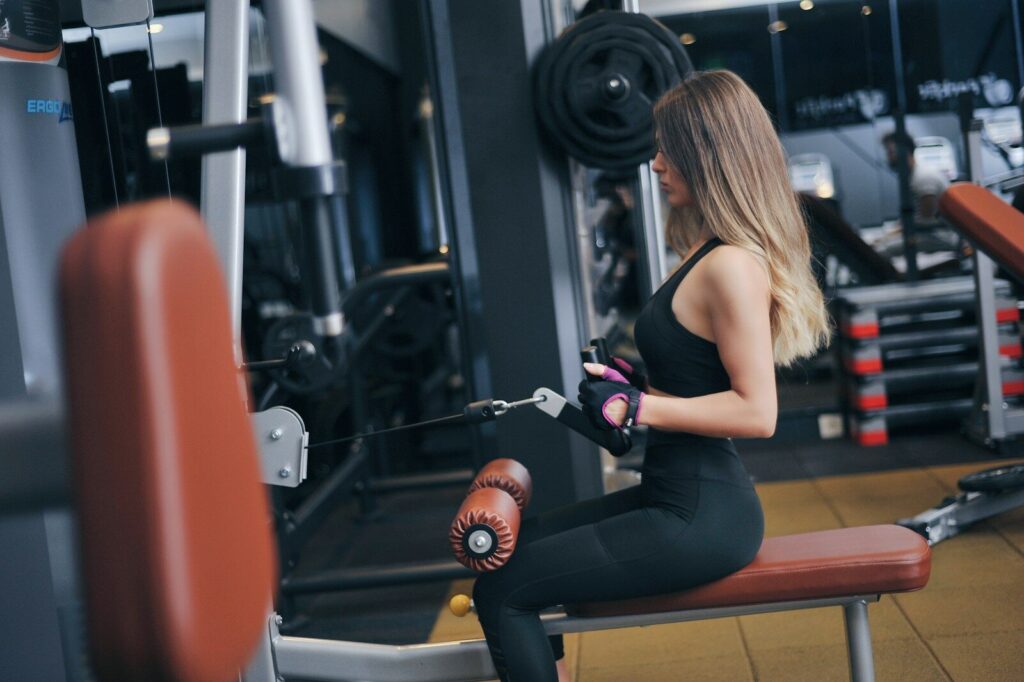
4. Seated Cable Row
The movement: Use the narrow double grip (the one that looks like a metal triangle). With your back completely straight and your feet firmly on the footrests, pull the cable toward the pit of your stomach. Imagine you want to squeeze an orange by bringing your two shoulder blades together at the end of the movement.
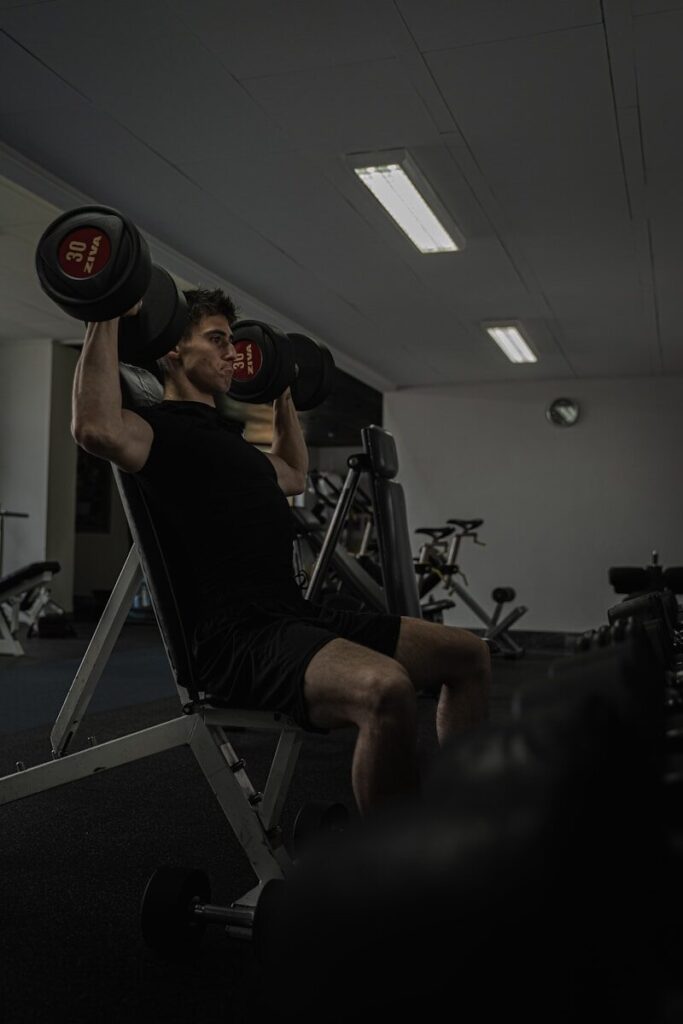
5. Seated Dumbbell Shoulder Press
The movement: Sit on a bench with a backrest and lift the dumbbells to ear level. Push them straight up toward the sky until your arms are extended, drawing a sort of pyramid in the air. Lower slowly back to the starting position.
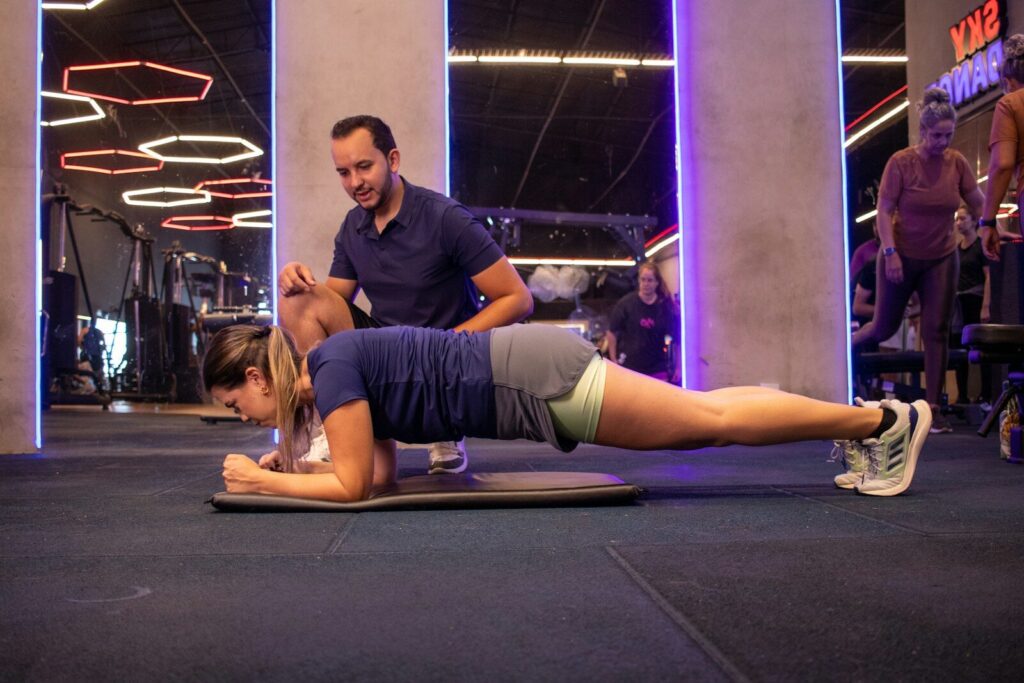
6. Abdominal Plank
The movement: Place your forearms and toes on the floor. Keep your body in a straight line, like a wooden plank. Do not let your hips sag toward the floor or lift your butt too high. Squeeze your core and glutes hard.
The Summary Roadmap (Your Cheat Sheet)
Save this table on your phone. It is your executive summary to know exactly what to do, how long to rest, and how many sets to complete each training day:
| Exercise | Movement Pattern | Sets and Reps | Recommended Rest |
| 1. Leg Press | Squat / Bend down | 3 sets x 10 reps | 90 seconds |
| 2. Lat Pulldown | Vertical pull | 3 sets x 12 reps | 60-90 seconds |
| 3. Dumbbell Chest Press | Horizontal push | 3 sets x 10 reps | 90 seconds |
| 4. Seated Cable Row | Horizontal pull | 3 sets x 12 reps | 60-90 seconds |
| 5. Dumbbell Shoulder Press | Vertical push | 3 sets x 10 reps | 60-90 seconds |
| 6. Abdominal Plank (Plank) | Stability | 3 sets x 20-30 seconds | 60 seconds |
Conclusion: The Weight Room Is Conquered Rep by Rep
Nobody is born knowing how to adjust a machine or how many kilos to put on a barbell. The weight room can be intimidating at first with the noise of the plates and the strained faces, but remember that everyone in there walked through that same door feeling exactly the way you do today.
You don’t need strange routines or weird balancing acts. You need to master these six basic movements, stay consistent three days a week, and learn to enjoy watching yourself get a little stronger each day. Grab your towel, adjust your weight, and start training.